Where the grid simply isn't
Plenty of work in New Zealand happens where there is no useful power connection at all: remote construction and roading sites, forestry and infrastructure projects, rural events, disaster-response and utility works down the end of a long line. Electric vehicles and equipment are increasingly expected to operate in exactly these places — and the usual answer to charging them, a fixed grid connection, is not just slow or expensive here. It is often impossible.
For these sites the question is not "fixed versus mobile charging". It is whether renewable, high-power charging can exist at all without a connection to draw on. The answer is that it can, provided the power is generated or stored locally and delivered on a schedule the operation can rely on.
Bring the power, don't wait for it
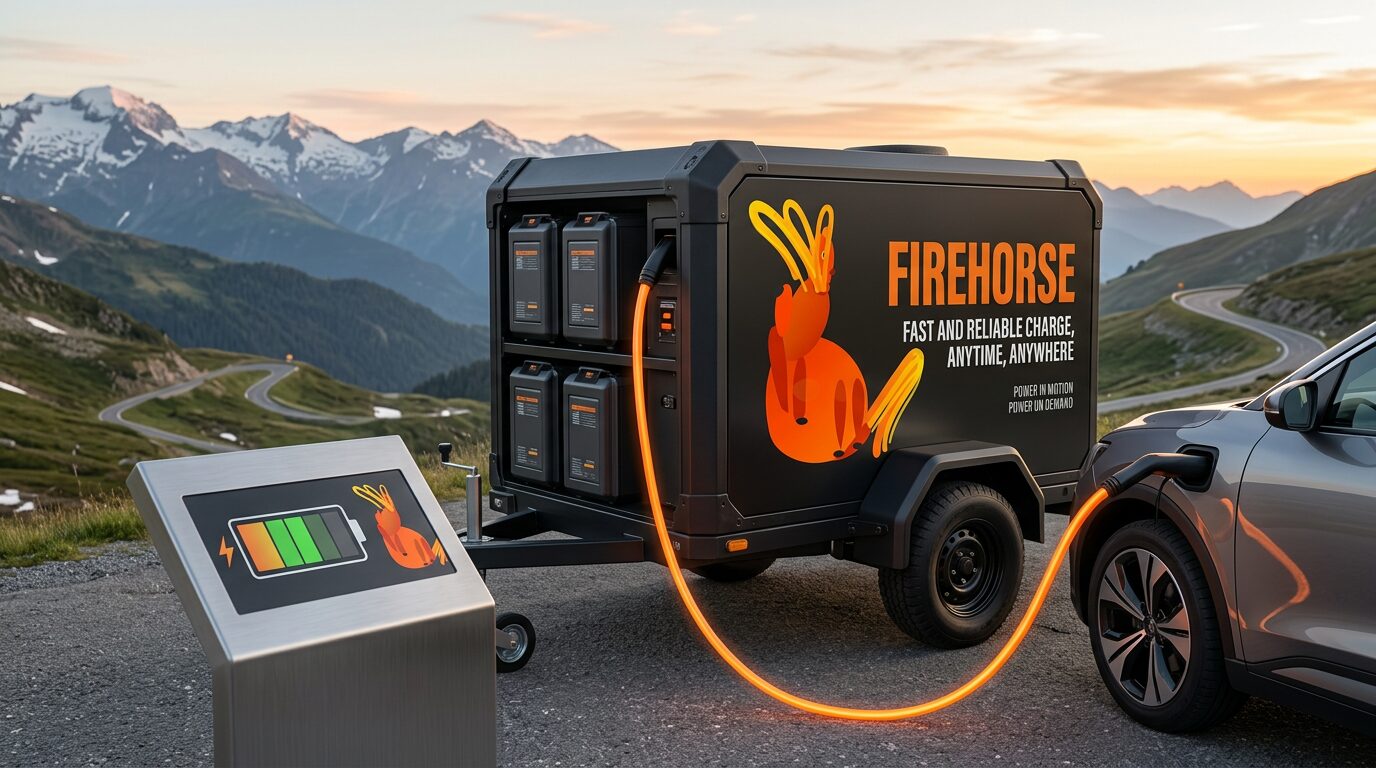
An off-grid field unit is built around on-board renewable-backed energy storage. Rather than pulling from a grid connection that does not exist, it carries its charge — buffered in battery storage and topped up from renewable sources such as on-site solar or renewable-sourced replenishment — and dispatches it as high-power charging to vehicles and equipment on site. The result is rapid charging in places a fixed charger could never be installed, delivered on-site and on time.
Because the unit is self-contained, it deploys in days, not the months-to-years a remote grid extension would take, if a lines company could offer one at all. When the project moves, the unit moves with it. Capacity follows the work rather than being stranded at a site that will be gone in a season.
Keeping it renewable off the grid
Off-grid does not have to mean diesel. The default fallback for remote power has long been a generator, which reintroduces exactly the emissions and fuel logistics that fleets electrified to escape. A renewable-backed field unit keeps the sustainability case intact away from the grid: energy is sourced from solar and certified renewable supply, stored, and delivered with the same traceability that matters for reporting back at the depot. For operators with ESG commitments, that means a remote worksite no longer has to be the exception that quietly undoes the numbers.
Designing for a site that keeps moving
Remote and roadside operations are rarely static, so the charging has to be planned around the duty cycle rather than a fixed location. The practical questions are the same ones that govern any deployment: how much energy do the vehicles and equipment need per day, what is the window to replenish it, and what is the peak simultaneous demand? With those known, storage is sized so the unit can carry a site through its working day and be replenished between them — and units can be combined or rotated for longer campaigns.
Managed dispatch matters even more off-grid, because there is no grid to lean on if a unit runs low. Booking, telemetry and service-level response keep the energy where the schedule needs it, and battery buffering provides resilience so the charge shows up even when conditions are against you.
The point of it
Electrification tends to stall at the edges — the sites too remote, too temporary or too far down the line to justify infrastructure. Off-grid renewable charging removes that limit. It lets a fleet or project run electric vehicles and equipment where there is no connection at all, on schedule, without diesel, and without waiting on a grid extension that may never come. Where motion cannot stop and the grid runs out of road, the power comes to the work.
Sources: Transpower grid-connection guidance (2025); MBIE New Zealand Energy Quarterly, March 2026 (renewable generation share).